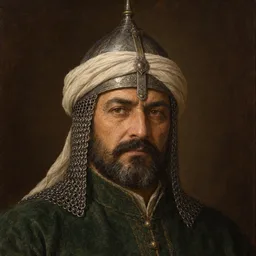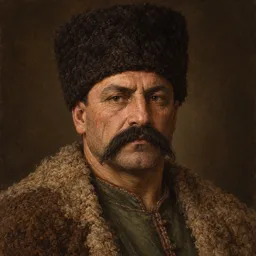
Ukraine · the Commonwealth · the Black Sea steppe

Eastern Wars

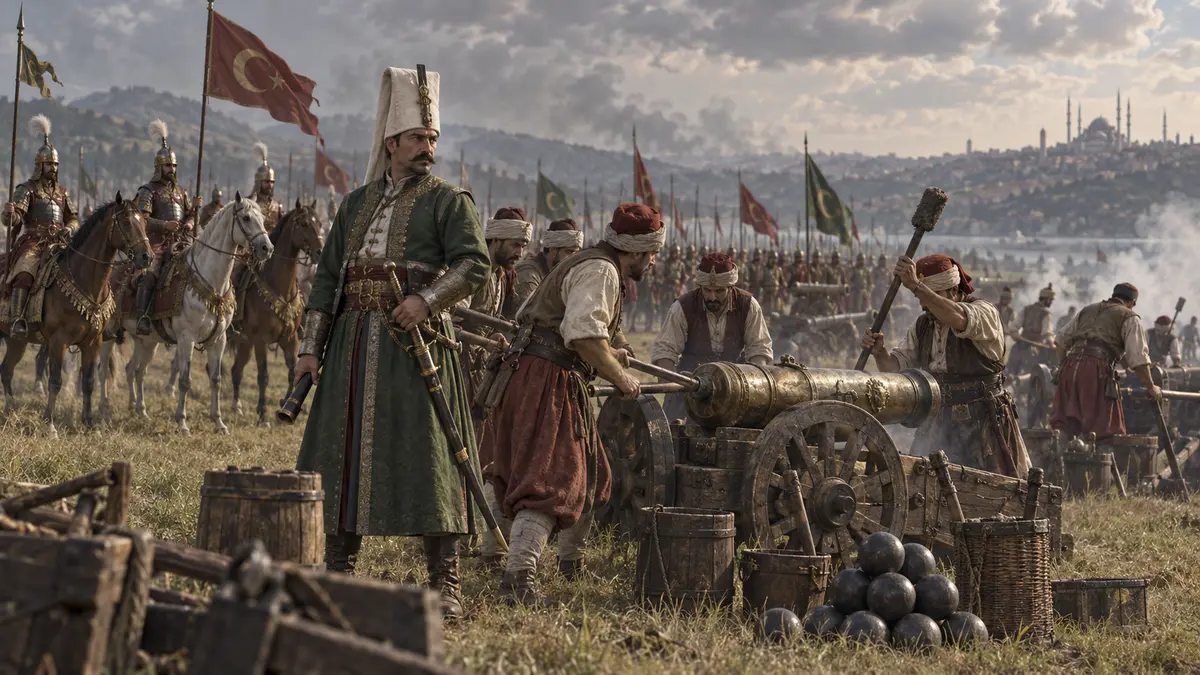
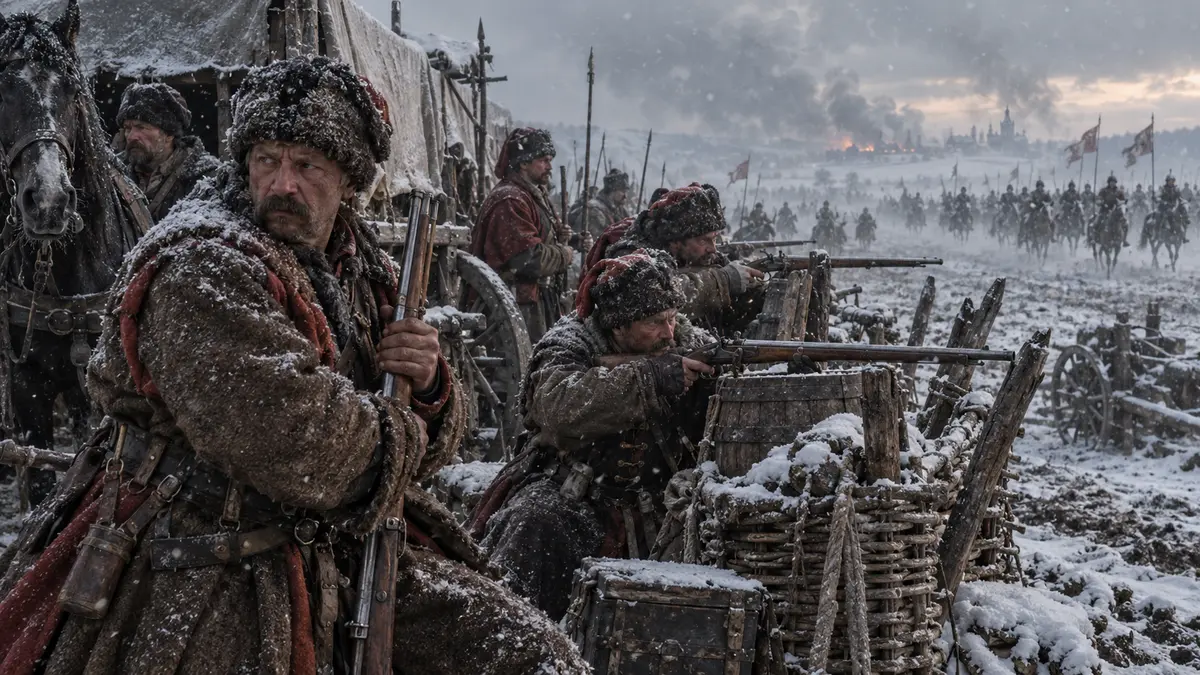
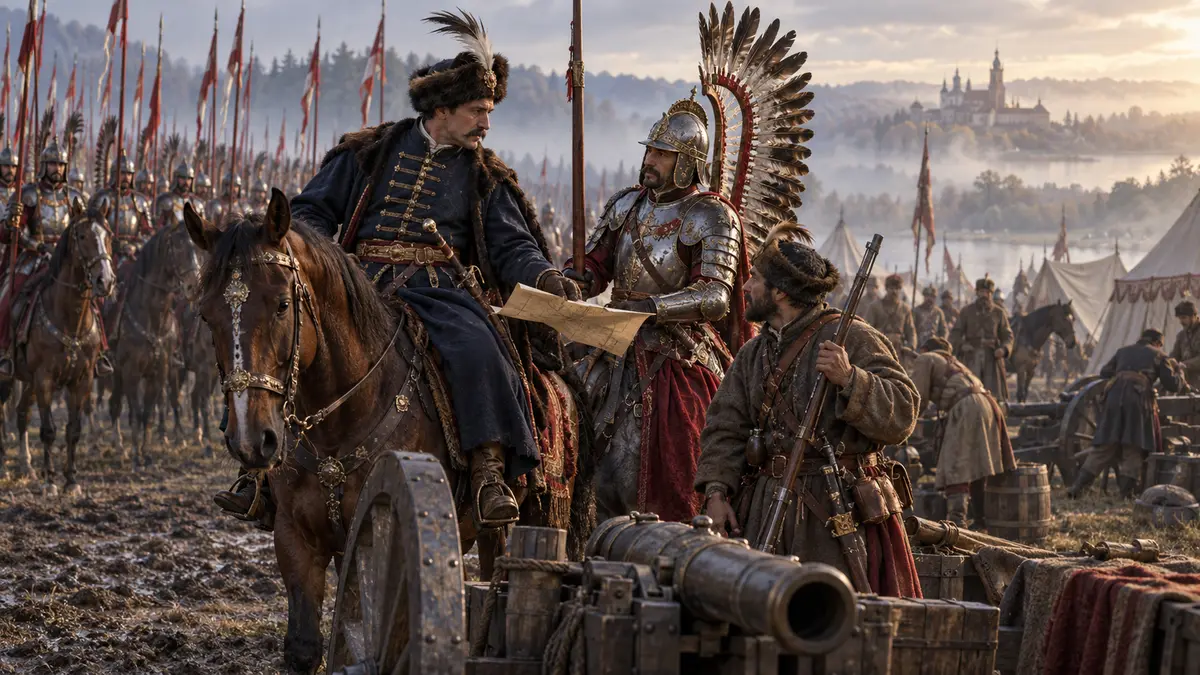
Command the regiments of the Cossack Hetmanate, the Polish–Lithuanian Commonwealth and the Ottoman Empire in real-time battles of the seventeenth century. Take the high ground. Hold the wagon fort. Break them before they break you.

Watch the trailerGoogle Play · coming soon
12historical battles3nations8–15minute battles3languages

The Age

A century of sabres and gunpowder

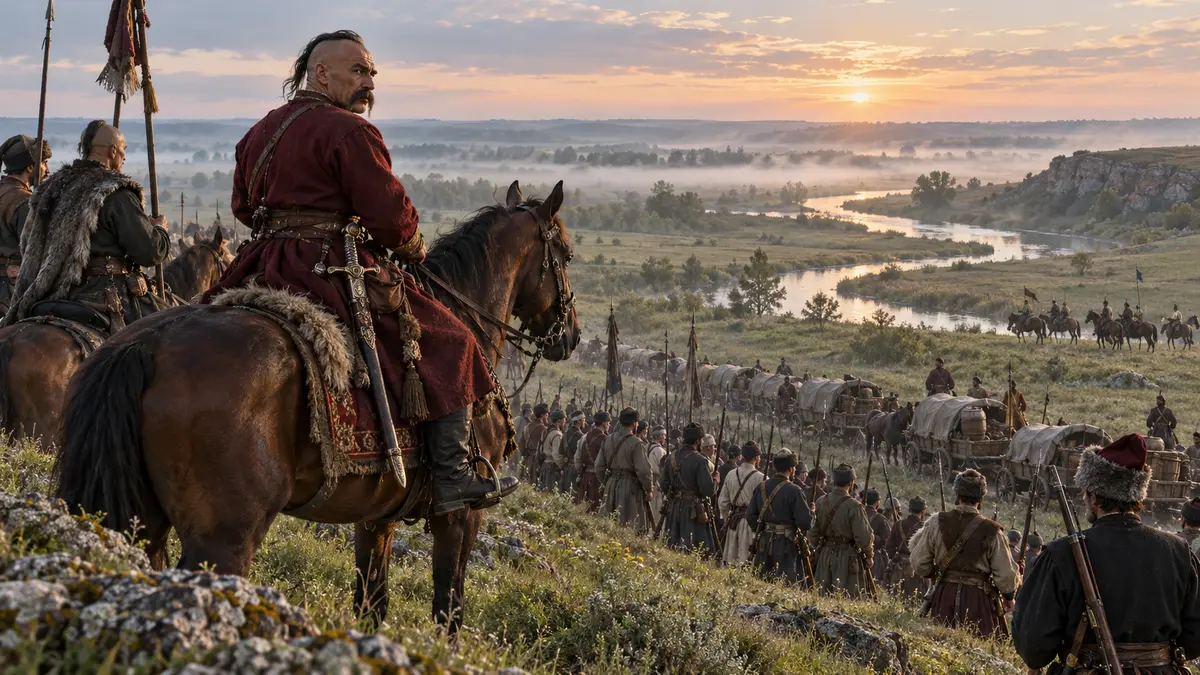
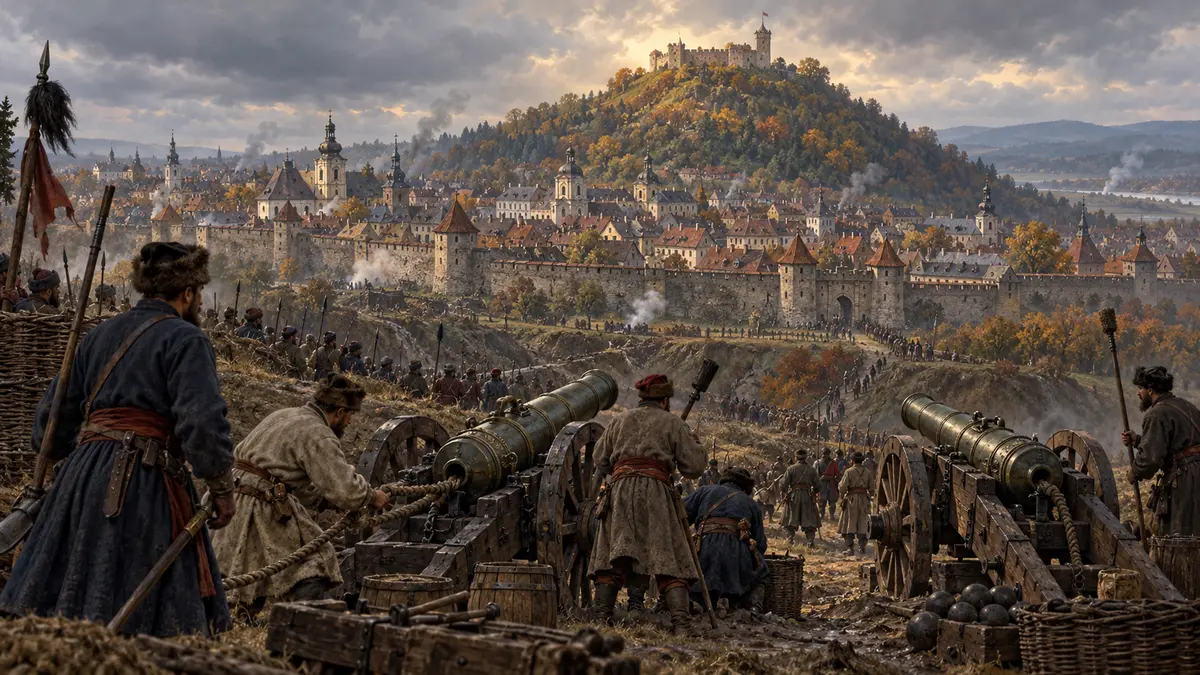
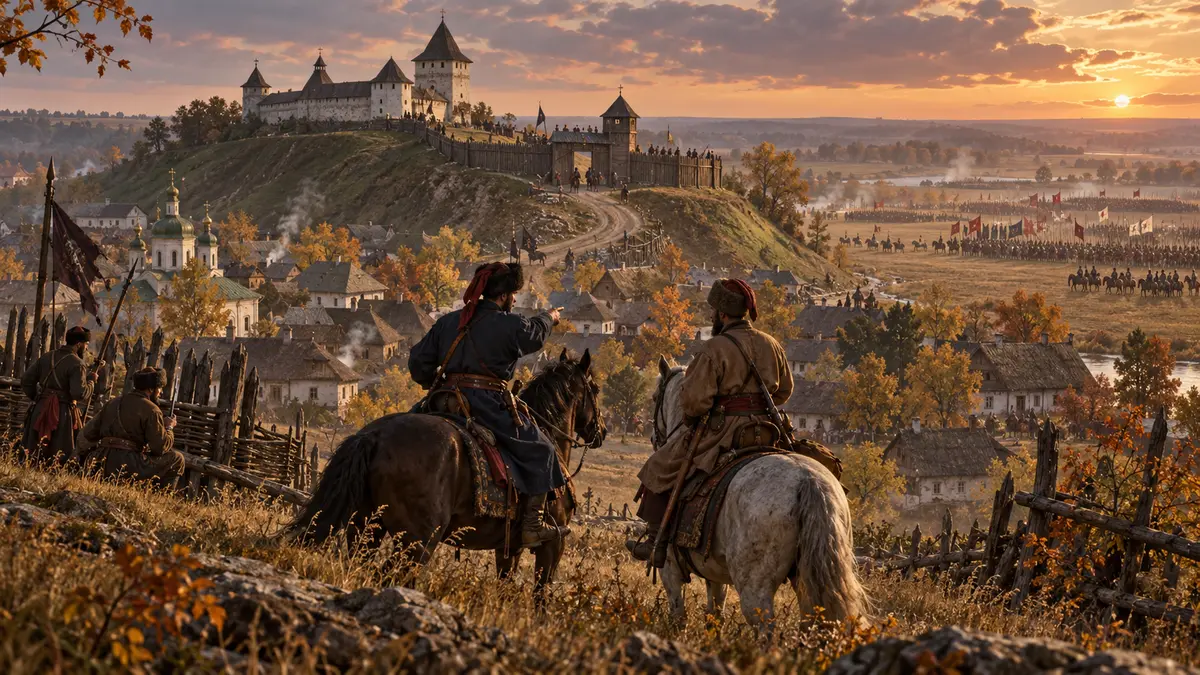
In the seventeenth century the lands of today's Ukraine were a frontier between three powers. The Polish–Lithuanian Commonwealth held the river valleys and the towns. The Ottoman Empire and its vassal, the Crimean Khanate, held the shore of the Black Sea and raided north every summer. Between them, below the rapids of the Dnipro, lived the Zaporozhian Cossacks — warriors, sailors and farmers who answered to a hetman of their own choosing.

For fifty years the Cossacks fought the Sultan beside the King. Then, in 1648, they turned on the King. Bohdan Khmelnytsky's rising began with a few thousand men at the Sich and grew into a war that destroyed three Crown armies in a single year, founded a Cossack state, and drew in the Khan, the Tsar, the Swedes and at last the Sultan himself.

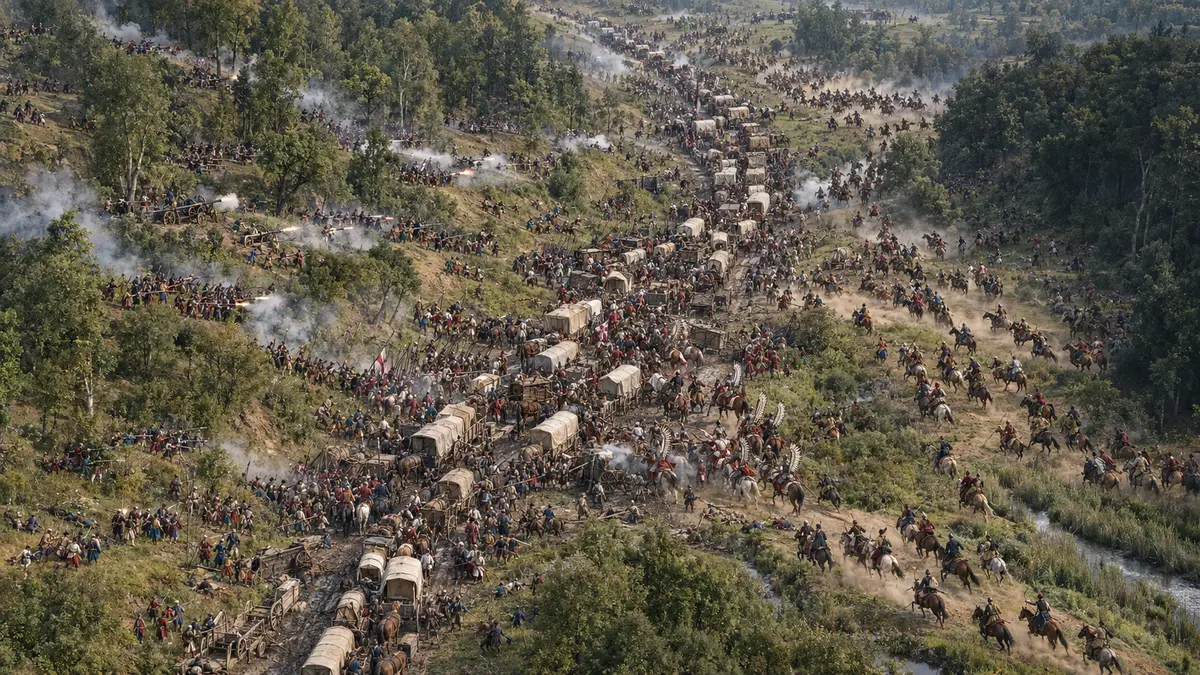
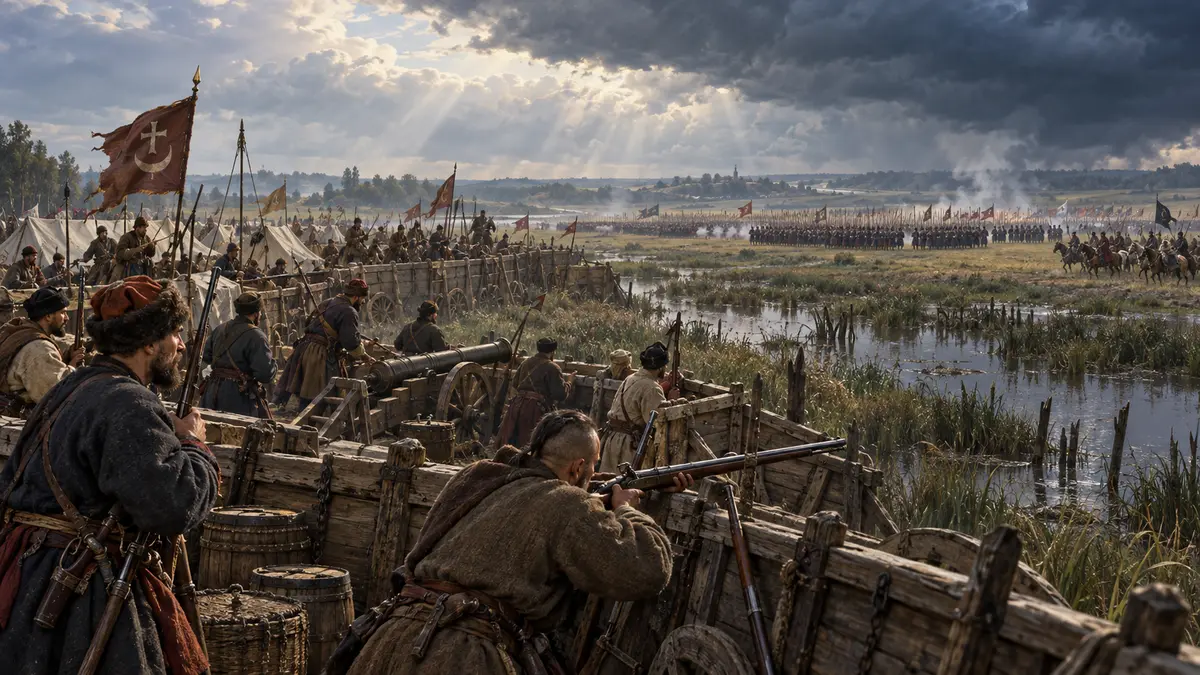
It was a war of the open steppe and the river crossing, of wagon forts chained together in the field, of winged hussars charging home and musket volleys from behind a rampart of carts. Eastern Wars puts you in command of it.

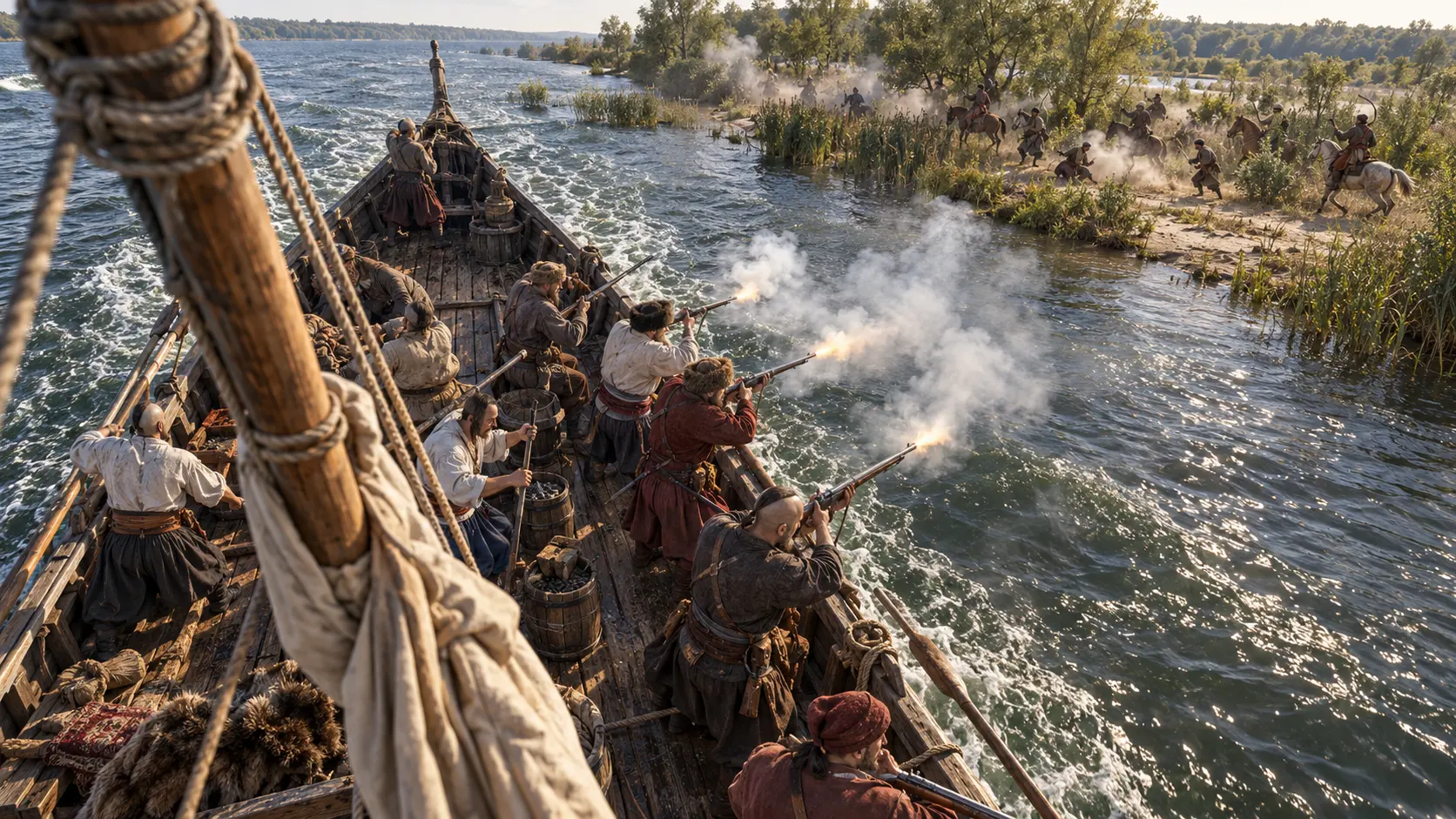
Cossack boats on the Dnipro. The Zaporozhian host went to war by river as often as by land.

The Zaporozhian Host

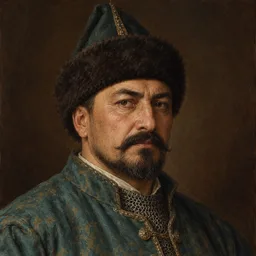
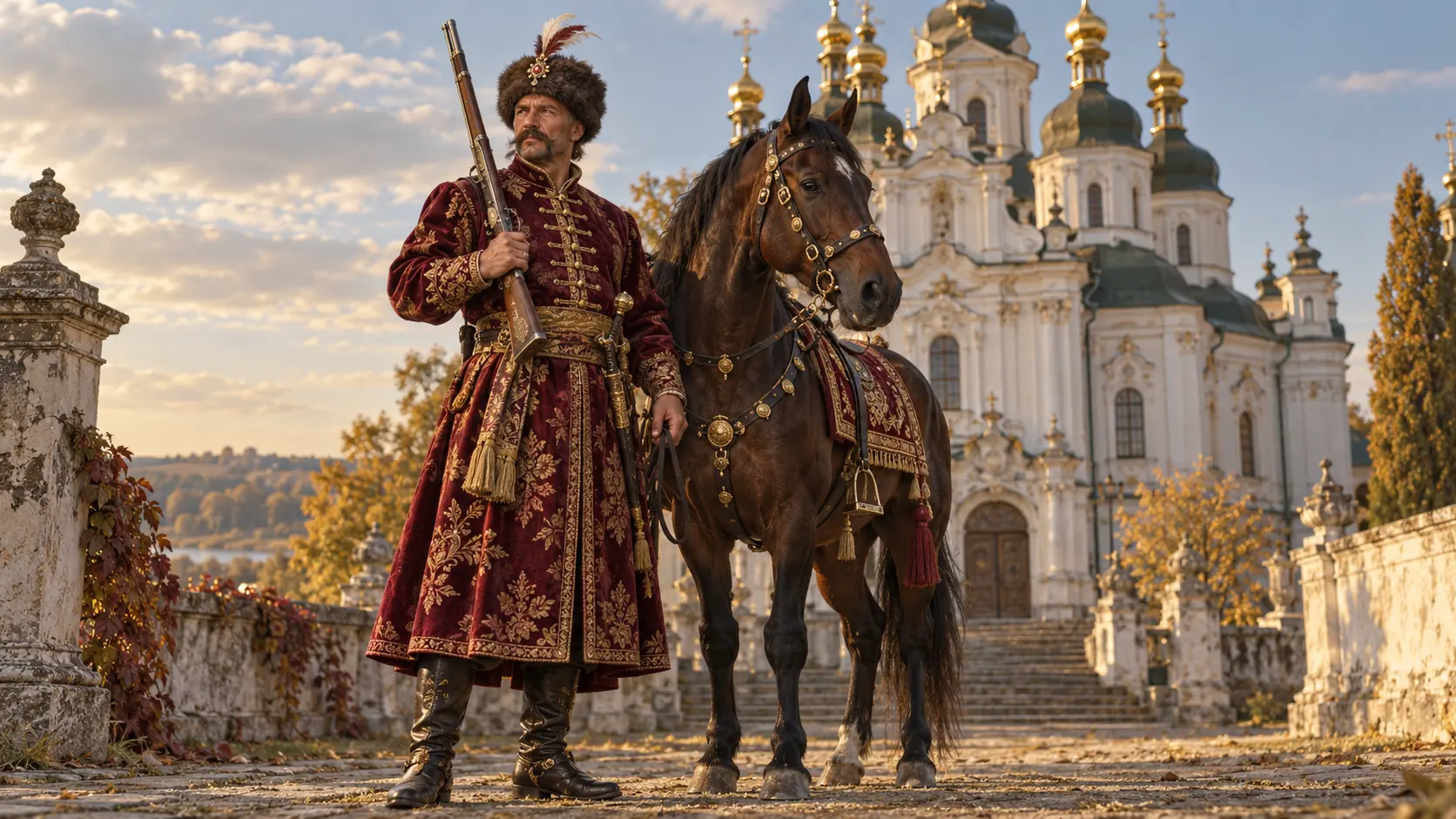
Elected hetmans, registered regiments and the free Sich below the rapids. Masters of the wagon fort and the musket.

The Commonwealth

King, Senate and a proud nobility, with the finest heavy cavalry in Europe: the winged hussars.

The Ottoman Empire

The Sultan's janissaries and sipahis, and guns heavier than anyone else's. Its border ran along the Dniester.

The Crimean Khanate

The Khan's horde: swift, fickle allies who decided more than one battle by leaving it.

Chronicle of the wars

In the campaignThe wider age

Beside the King, against the Sultan

  1. 1620

    Cecora

    An Ottoman army destroys the Crown's on the Prut. Grand Hetman Żółkiewski falls; among the captives is a young Cossack officer, Bohdan Khmelnytsky.

  2. 1621

    Khotyn

    Petro Sahaidachny's Cossacks stand with the Commonwealth's army on the Dniester and hold their camp for a month against Sultan Osman II. The Sultan turns back.

  3. 1638

    The golden peace

    The last of the early risings is crushed. The Registered Host is cut down, the Sich is garrisoned, and the frontier falls quiet for ten years.

Khmelnytsky's War

  1. 1648

    The rising

    Khmelnytsky is elected hetman at the Sich and allies with Tuhai Bey's Tatars. In May he destroys two Crown armies at Zhovti Vody and Korsun; in September a third flees at Pyliavtsi. Lviv and Zamość are besieged before winter.

  2. 1649

    Zbarazh and Zboriv

    Prince Jeremi Wiśniowiecki holds Zbarazh behind his earthworks for six weeks. The king marches to relieve him and is caught crossing the Strypa at Zboriv. A treaty follows, and with it a Cossack state.

  3. 1651

    Berestechko

    The largest battle of the century. The Khan's horde abandons the field and the Cossack camp breaks out across the marsh. In the autumn the war comes to Bila Tserkva.

  4. 1652

    Batih

    On a hill above the Southern Buh, Hetman Kalinowski's army is surrounded and annihilated.

  5. 1653

    Zhvanets

    The armies face each other above the Dniester through the autumn, until the Khan makes his own peace with the King.

  6. 1654

    Pereiaslav

    The hetman places the Hetmanate under the protection of the Tsar of Muscovy. The war widens.

  7. 1655

    Okhmativ

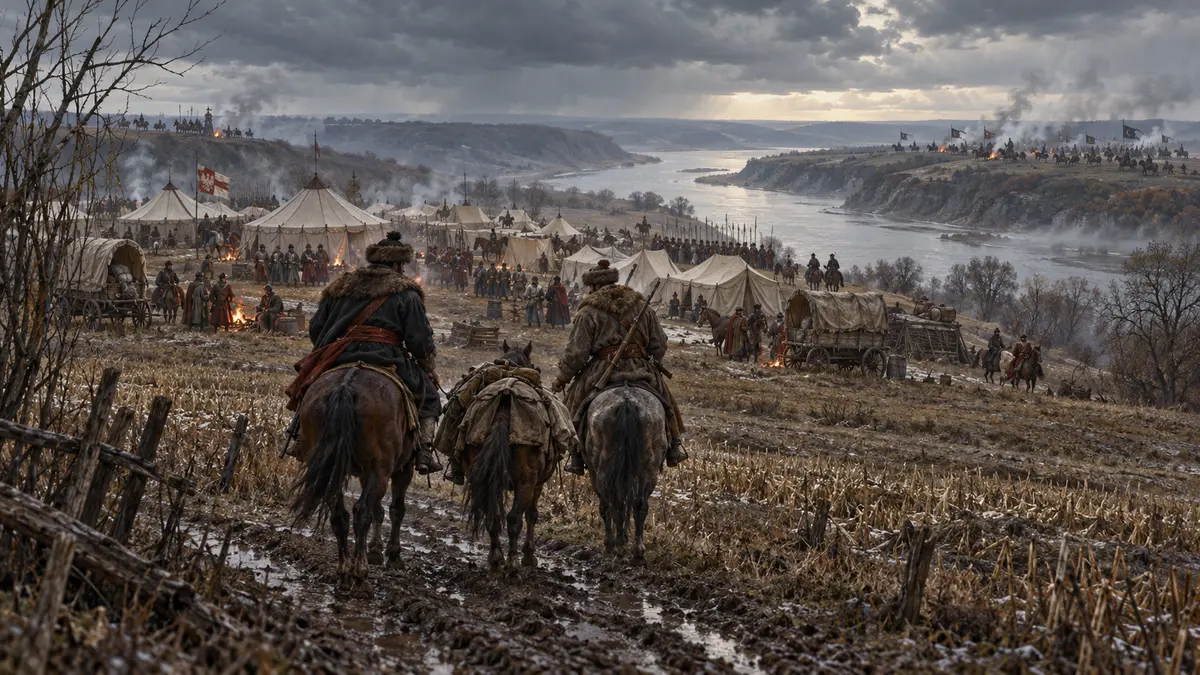
    In a killing January frost the Crown and its new Tatar allies fight the Cossacks and Muscovites around their wagon fort for days on end.

  8. 1657

    The hetman dies

    Bohdan Khmelnytsky dies at Chyhyryn in August. The decades of civil war that follow are remembered as the Ruin.

The Ruin and the Crescent

  1. 1672

    Kamianets

    Sultan Mehmed IV takes Kamianets-Podilskyi, the strongest fortress of Podolia, and makes Podolia an Ottoman province.

  2. 1673

    Khotyn again

    Grand Hetman Jan Sobieski storms the Ottoman camp at Khotyn. A year later he is king.

  3. 1678

    Chyhyryn

    After two great sieges, Chyhyryn, the old capital of the hetmans, falls to the Ottomans in ruins.

  4. 1683

    Vienna

    Jan III Sobieski's winged hussars break the Ottoman siege of Vienna. The Crescent's tide in Europe begins to turn.

The Campaign

Twelve battles of Khmelnytsky's war

From the camp on the Zhovta in the spring of 1648 to the frozen field of Okhmativ, the campaign follows the hetman's war battle by battle. Your army marches on between them: the fallen stay fallen, and the survivors carry their losses and their experience into the next field.

01
April–May 1648

Zhovti Vody

Stefan Potocki's vanguard has dug in on a rise by the Zhovta, the ford at its back, while Tuhai Bey's Tatars ride round the camp. Take it.

02
26 May 1648

Korsun

The Crown hetmans' army marches in tabor through the hills. At the head of the wooded Krutyi Bairak the road turns under your guns.

03
September 1648

Pyliavtsi

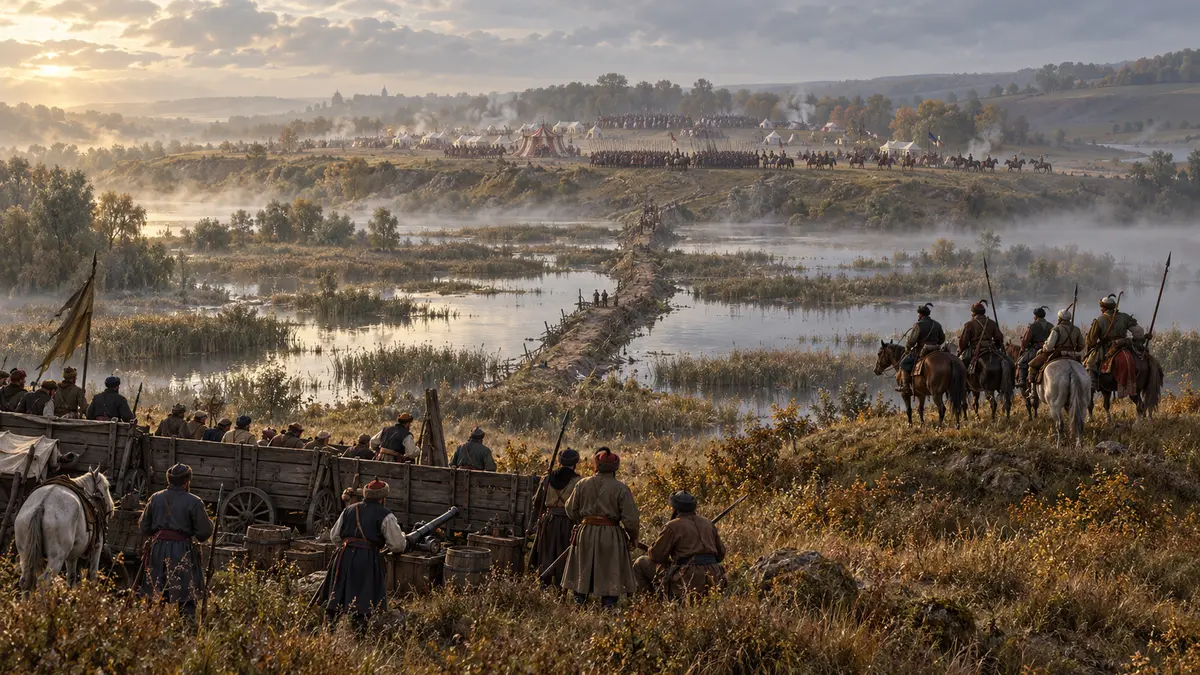
A new Crown army under three regimentarzes faces your camp across the marshy Ikva, with one dam between you.

04
October 1648

Lviv

The Crown has dug in on the slope below the High Castle: two trenches of shot and guns, hussars waiting at either end.

05
November 1648

Zamość

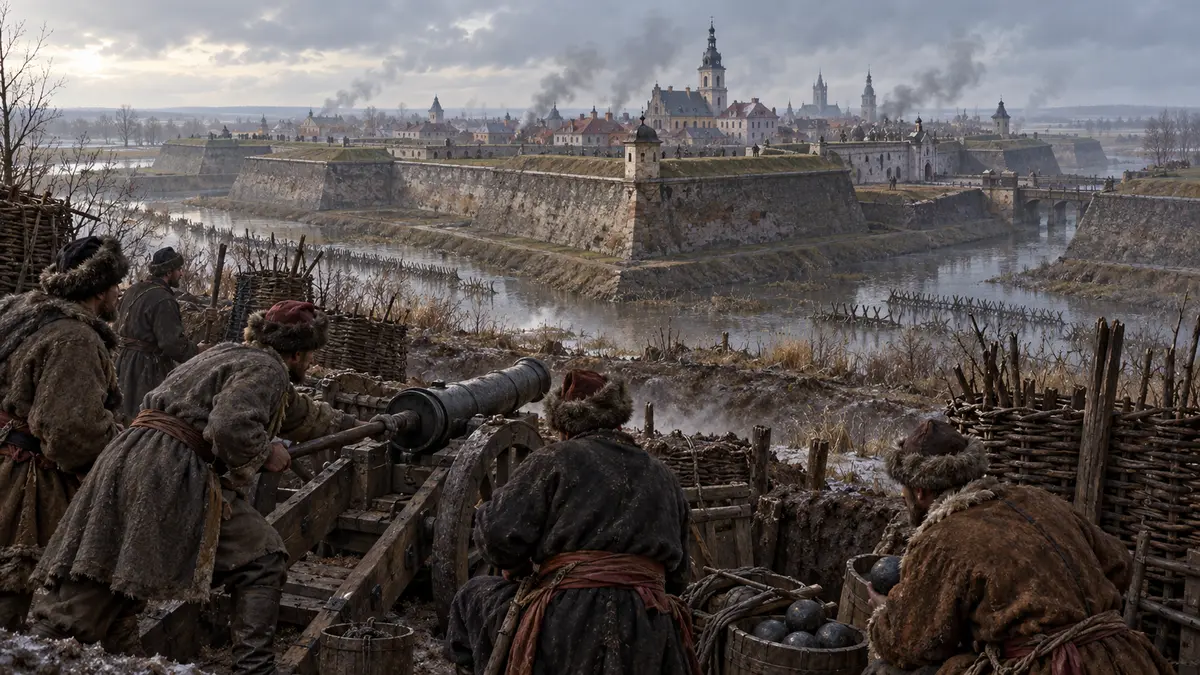
The strongest fortress in the Commonwealth, bastions all round. Bring up the guns and breach the walls.

06
July 1649

Zbarazh

Prince Jeremi Wiśniowiecki's army waits behind earthworks and a palisade. Breach it and break them.

07
15–16 August 1649

Zboriv

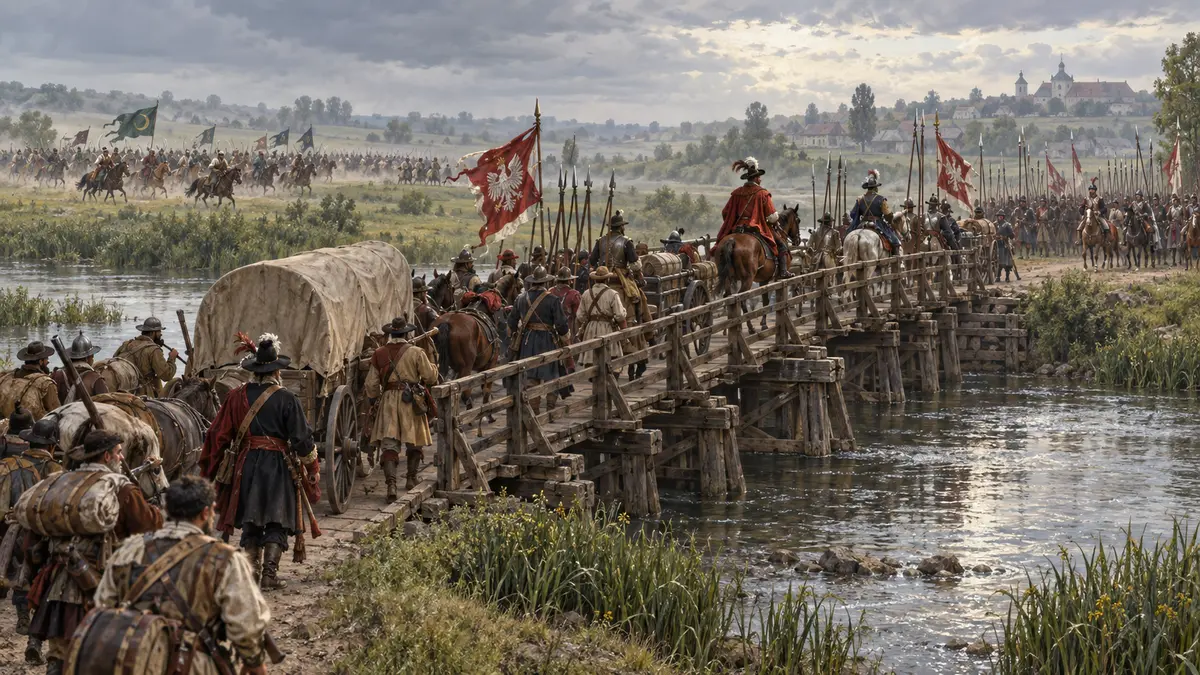
The king's army is caught at the crossing of the Strypa, half over the bridges, half still on the west bank.

08
28–30 June 1651

Berestechko

Your camp with the marsh at its back, the Khan's horde on your flank. The greatest battle of the age.

09
September 1651

Bila Tserkva

The Crown and the Lithuanians march on the town. Hold it and its castle hill.

10
1–2 June 1652

Batih

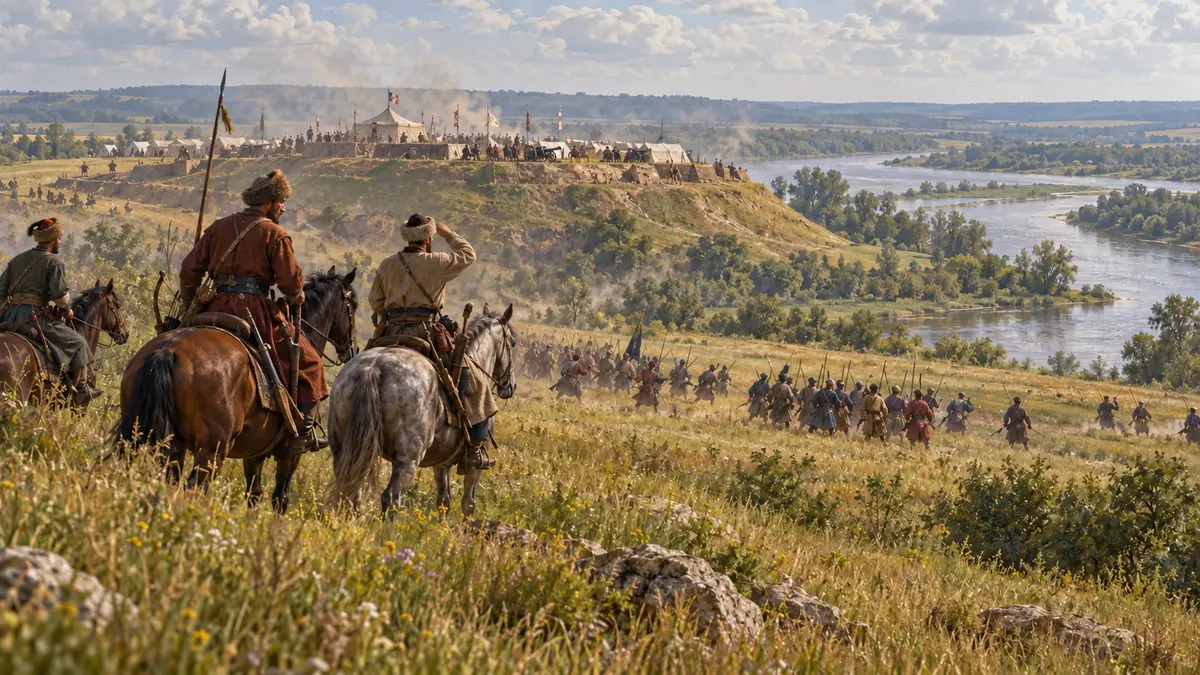
Hetman Kalinowski's army sits in its camp on Batih hill, above the Southern Buh.

11
Autumn 1653

Zhvanets

The king's army in the fields above the Dniester. The Khan's horde rides with you — for now.

12
January 1655

Okhmativ

A killing frost. The Crown and its new Tatar allies catch your army in the open by its wagon fort.

A second campaign

The Crown's War, 1648–1655

Fight the same war from the other side of the rampart. Hold Potocki's camp at Zhovti Vody, lead the hetmans' column through Korsun, keep Wiśniowiecki's earthworks at Zbarazh and command the royal army at Berestechko.

Zhovti VodyKorsunZbarazhZborivBerestechkoOkhmativ

On the march: The Ottoman Frontier · The Khan's Ride · The Muscovite March · The Northern Expedition

Trailers

See them take the field

The Nations

Three powers, one steppe

Each nation fights its own way, with its own regiments, its own banners and its own voices.

The Zaporozhian Host

Cossack Hetmanate

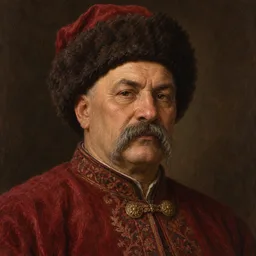
Registered Cossacks and Sich shooters who fight from behind chained wagons, pike Cossacks, dragoons and scouts, the Chern levy that rose with the hetman, and Tuhai Bey's Tatar horse riding alongside. Few guns, but nobody holds a tabor like them.

Campaign: Khmelnytsky's War · Skirmish

  • Cossack Infantry
  • Chern Levy
  • Registered Cossacks
  • Pike Cossacks
  • Sich Shooters
  • Cossack Dragoons
  • Tatar Heavy Cavalry
  • Tatar Light Cavalry
  • Cossack Artillery
  • Zaporozhian Scouts
  • Tabor Wagons
  • Bohdan Khmelnytsky
  • Cossack Field Engineers
  • Mobile Wagon Camp
The Crown and the Grand Duchy

Polish–Lithuanian Commonwealth

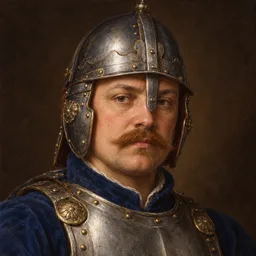
Winged hussars who break any line they reach, pancerni and reiters, haiduk infantry, German mercenary shot and pike, Lisowczycy raiders and the Crown's field guns. A rich army, and a proud one.

Campaign: The Crown's War · Skirmish

  • Haiduk Infantry
  • Mercenary Pikemen
  • German Mercenary Shot
  • Registered Cossacks (Crown)
  • Dragoons
  • Lisowczycy
  • Pancerni
  • Winged Hussars
  • Commonwealth Field Guns
  • Crown Tabor
  • Regimentarz's Retinue
  • Reiters
  • Pospolite Ruszenie
The Sublime Porte and the Khan

Ottoman Empire

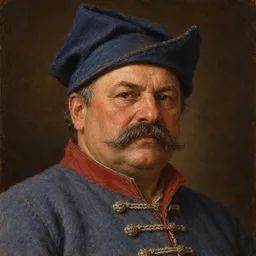
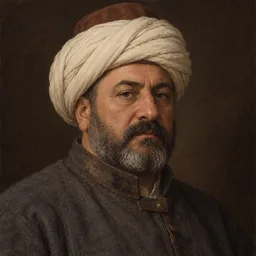
Janissaries with their long muskets, sipahi heavy horse, reckless deli, azaps and sekban, Crimean Tatar riders, mortars and the heaviest guns on the field.

Skirmish now · campaign The Ottoman Frontier in the making

  • Azaps
  • Janissaries
  • Crimean Tatars
  • Deli
  • Sipahi
  • Ottoman Heavy Guns
  • Wagon Laager
  • Serdar's Retinue
  • Sekban Musketeers
  • Humbaracı Mortars
  • Lağımcı Siege Engineers

The regiments

Every regiment is drawn as a block of painted men whose width is its frontage and whose depth is its ranks. Its chief has a face, and a voice.

Registered Cossacks

Infantry

Registered musketeers who stand in line and fire by volley.

Pike Cossacks

Infantry

Braced pikes: the wall that horsemen break on.

Tabor Wagons

Wagons

Chained wagons that become a fort, firing on every side.

Cossack Artillery

Artillery

Light field guns whose roundshot ploughs through the ranks.

Bohdan Khmelnytsky

Commander

The hetman's mounted guard: rallies the regiments around him and charges.

How it plays

A hetman with a spyglass, not a sergeant with a whistle

You don't move soldiers one by one. You choose where the line stands, which hill the guns own and when the hussars commit — and whether the wavering levy on your left can hold for ten more seconds.

Terrain is a weapon

Height and slope feed straight into range, accuracy, speed, charge power and morale. Take the ridge first and you will feel it. Rivers are crossed at the ford or the bridge, or not at all.

Morale is the real health bar

Battles are decided by regiments breaking, not by the last man falling. Hit a shaken unit in the flank and it is gone in seconds; rally your own before the rout spreads.

Regiments answer back

Every regiment acknowledges orders, curses the marsh, panics under cannon fire and cheers when the enemy runs, voiced in Ukrainian, Polish, Turkish and Crimean Tatar.

Wagon forts and sieges

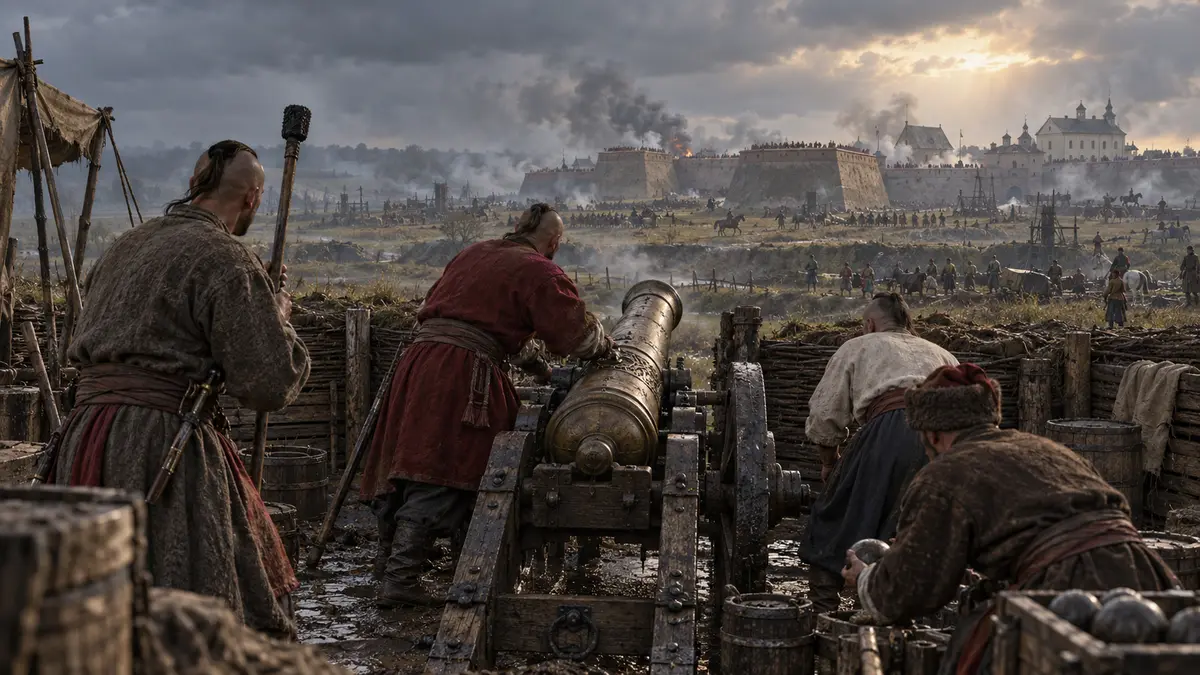
Chain the wagons into a tabor and fight from behind it. Man the trenches, storm palisades, and bring the guns up to breach a fortress wall.

A campaign that remembers

Between battles your army carries its losses, its veterans and its commanders forward. Every colonel has a face, and a wounded one when his regiment bleeds.

Skirmish, and two-phone battles

Pick a nation, a field and an army from a points budget and fight the AI on three levels, or face a friend on two phones over the same Wi-Fi.

Made for phones, landscapeBattles of 8–15 minutesPauses when a call comes inPlays offlineNo ads, no accountsCollects no data

Take command

Eastern Wars is coming to Android phones and tablets, in English, Ukrainian and Polish.

Google Play · coming soonMore from Loca Deserta